
Beyond the Squeeze: A Man’s Guide to Pelvic Floor Health and Practical Self-Care
Feb 13, 2026
Key Takeaway:
- The Nervous System Connection: Chronic pelvic pain or distressing sensations often signal a sensitized nervous system, immune system, and overprotective brain, not tissue damage.
- The Relaxation Priority: Many men have muscles that are too tight (hypertonic), so traditional strengthening exercises can make things worse.
- Self-Care is Evidence-Based: By practicing mind-body techniques regularly at home or work, you can train your brain to stop seeing pelvic sensations as threats.
Most people think of the core as just abs or back muscles. But true stability and pelvic health rely on deeper muscles that many men overlook until they have pain, urinary problems, or sexual issues.
At PelvicSense we move beyond the outdated just squeeze advice. Instead, we utilize a pain-science-informed approach that addresses the intersection of muscular function and nervous system regulation. This isn't about clinical therapy; it’s about understanding the biological software that runs your pelvic hardware.
The Body’s Alarm System
To understand pelvic problems, it helps to look at the nervous system, immune system, and brain. When pain persists, your nervous system becomes sensitized and the brain becomes overprotective, like a home alarm that keeps going off even when there’s no real danger. When the brain interprets signals as threats, it produces pain and muscle tension in the pelvic region as protective outputs.
This is where our superpower of neuroplasticity comes in to change patterns. You can send safety messages to your nervous system, which over time helps the brain reduce its protective pain output and increase feel-good chemicals instead. Chronic pelvic pain isn’t just about the muscles; it’s about a sensitized nervous system that needs to receive more safety messages. At PelvicSense, we help you retrain your nervous system, immune system, and brain to achieve pelvic health.
Understanding Male Pelvic Floor Muscles and the Guarding Reflex
What Are Men’s Pelvic Floor Exercises?
Before starting exercises, it’s good to know what you’re working with. The male pelvic floor is a group of muscles that form a hammock at the base of your pelvis. They support your bladder and bowel, are important for sexual function, and help keep your core stable.
How to Identify Your Pelvic Floor Muscles
Imagine you’re trying to stop urinating mid-stream or prevent passing gas. The muscles you engage are your pelvic floor. You can also think of it as gently drawing your testicles upward or shortening your penis. The internal lift you feel is the pelvic floor engaging. It’s important to note that you should be able to do this without holding your breath or tightening your buttocks or thighs.
The Guarding Reflex: When Protection Becomes a Problem
Ongoing stress, healing after surgery, past injuries, or trauma to the pelvic area can make the pelvic floor muscles tighten without you noticing. This is called a guarding reflex, in which the muscles tense automatically to protect you when the nervous system interprets danger signals as threats.
This guarding leads to hypertonicity meaning the muscles stay tight all the time. Because these muscles surround the urethra and rectum, this constant tension can cause problems such as:
- Signs of Pelvic Floor Problems: Frequent or urgent urination, weak or interrupted urine stream, dribbling post void, pelvic pain or pressure (often described as sitting on a golf ball), difficulty achieving or maintaining erections, pain during or after ejaculation, constipation, or painful bowel movements.
- What Causes Dysfunction: Pain science research shows that the nervous system may become sensitized after injuries like sports trauma, tailbone falls, or pelvic impact. When the nervous system detects ongoing threats whether emotional, physical, psychological, or social it sends these danger signals to the brain. The brain then produces pain as a protective output based on perceived threat, not tissue damage. Even after tissues heal, the sensitized nervous system, immune system, and overprotective brain continue generating pain and muscle guarding, creating a self-reinforcing cycle. This is neuroplasticity working against you, but the good news is that neuroplasticity can also be harnessed to retrain the system toward safety and reduced pain.
Why Do Pelvic Floor Muscles Get Weak in Men?
While overly tight muscles (hypertonicity) are common, some men also have weak pelvic floor muscles. This can happen after prostate surgery, from nerve problems, long periods of inactivity, or not learning how to use these muscles. Weakness and tightness can happen together muscles that are always tense often become weak because they can’t move properly. That’s why it’s important to get checked before starting exercises.
Identifying the Four Horsemen of Male Pelvic Pain
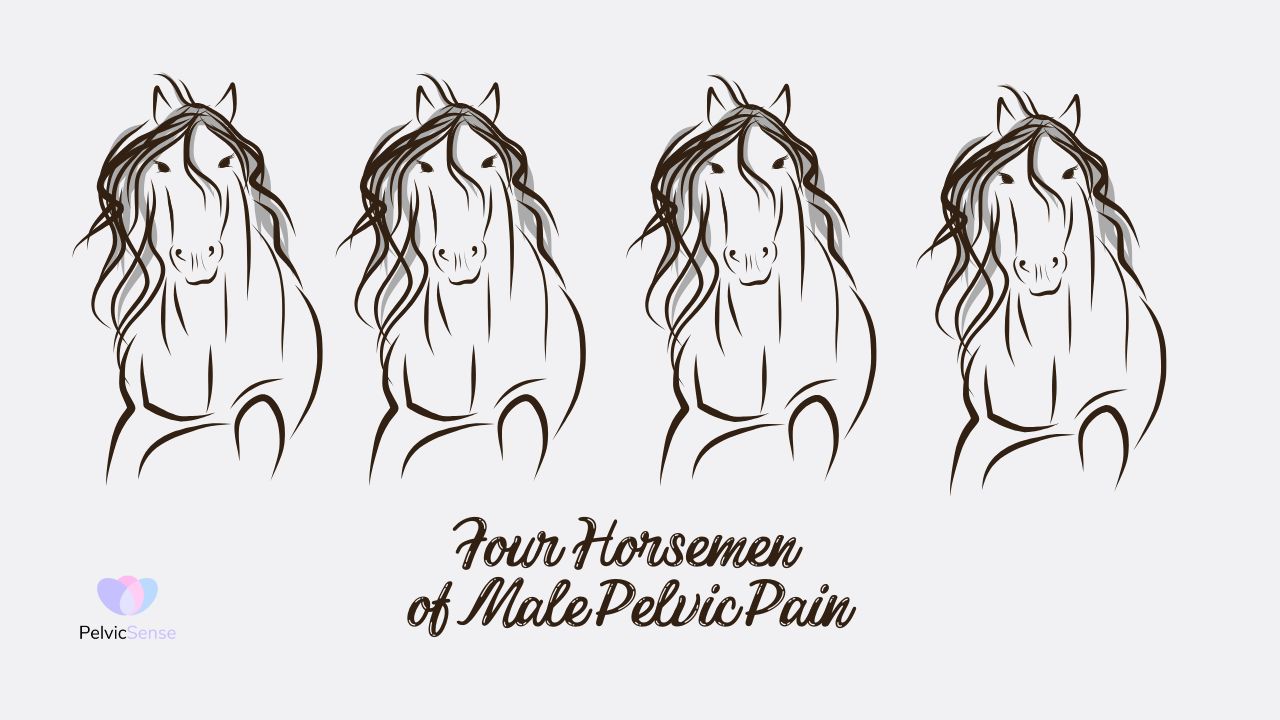
To help you understand your pain, we use Dr. Di Wu’s Four Horsemen of Male Pelvic Pain (Wu & Rosedale, 2018). This framework helps identify the main causes of pelvic problems:
- The Spinal Horseman: Pain driven by spinal or disc issues that refer sensation into the pelvic region.
- The Pelvic Horseman: Issues directly rooted in the pelvic floor muscles themselves, such as trigger points or dynamic coordination problems.
- The Neural Horseman: Dysfunction involving the central or peripheral nervous systems (like the pudendal nerve).
- The Tissue Horseman: Pain resulting from actual tissue injury, surgery, or localized pathology.
By finding out which horseman or combination is behind your symptoms, PelvicSense can help you focus your recovery at home more effectively.
Sending Safety Messages to the Brain Through Lifestyle
If pain is the brain’s way of saying I have to protect you because you are under threat, recovery requires us to send high-quality safety messages to the central nervous system. Research shows that weaving in a few simple micro moments of calm throughout your day can help lower your body’s tension, reduce pain, increase Heart Rate Variability (HRV), and stimulate the vagus nerve. This signals the parasympathetic nervous system to activate the rest, digest, eliminate, and be intimate functions. Less use of the sympathetic fight or flight response that keeps pelvic muscles clenched (Gerritsen & Band, 2018).
Take a Walk in Nature (Fractal Processing)
Taking a walk in nature or looking at landscape art does more than just clear your mind; it actually changes your brain chemistry. Research on Attention Restoration Theory (ART) shows that seeing natural elements such as trees, water, or clouds elicits soft fascination. Nature has patterns that are easy for the brain to process, unlike busy city scenes. This helps your brain’s fear center feel safe, which reduces muscle tension in the pelvic floor. When your brain feels safe, it lowers protective muscle tension throughout your body, including the pelvic area (Moseley & Flor, 2012).
Pet Your Dog (Oxytocin Release)
Spending time with a pet is a proven way to lower pain. Just 5 to 10 minutes with your pet can boost oxytocin and lower cortisol, the stress hormone. Oxytocin helps your brain feel safe, which allows tight pelvic floor muscles to relax (Beetz et al., 2012).
Anthony’s Case Study: Breaking the Cycle of Learned Faulty Childhood Patterns
Anthony, a 42-year-old accountant, struggled with severe perineal pain for two years. He received medical testing, x-rays for any fractures (none), PSA tests for prostate issues (normal), and had a nerve conduction test of his pudendal nerve (speed of nerve function was healthy). He was prescribed a few courses of antibiotics for prostatitis, but after a few weeks with no significant relief and growing concerns about his microbiome health, he and his MD decided to stop this course of treatment.
His doctor did not know what was causing Anthony’s symptoms and referred him to a pelvic physical therapist. The wait period for his first pelvic PT visit was 4 months!
The pain made him feel hopeless. He couldn’t work sitting down anymore, so he got a stand-up desk for remote work. He stopped meeting friends because sitting at a restaurant for more than 20 minutes was too painful. Sex was becoming a challenge, and he worried about future intimacy with his wife.
After joining the PelvicSense program Anthony learned his pain was not from an infection but from a guarding reflex caused by stress, constantly feeling that he wasn’t good enough, working long hours, combined with early childhood memories of being afraid of his loud and angry father and learning to repress his emotions as boys don’t cry.
Instead of just trying to fix the problem, Anthony focused on calming his system. He saw a therapist to work on emotional guarding and started PelvicSense to learn mind regulation and body exercises like those a pelvic physical therapist would teach. In about four months, he reduced his pain by 80%. His story shows it’s possible to retrain your brain and change how you feel pain.
Should Men Do Kegel Exercises?
This is important for men’s pelvic health. If your muscles are already tense, doing Kegels (repeated squeezing) is like trying to fix a cramp by tightening it more. PelvicSense teaches that for many men, the real goal is to relax the muscles. Unless you’re recovering from surgery, focusing on relaxation is usually more helpful than trying to strengthen.
Which Exercises Helps For Pelvic Floor Therapy For men
Once you know how a relaxed pelvic floor feels, you can start adding strengthening exercises in a coordinated way:
- 360-Degree Breathing: Expand your lower ribs on the inhale, feeling a subtle drop in the pelvic area. This is your foundation exercise.
- Coordinated Kegels: Contract the pelvic floor gently as you exhale during the challenging part of an exercise (like standing up from a squat). Release completely as you inhale.
- Diaphragmatic Breathing: Place one hand on your chest and one on your belly. Breathe in for a count of 4 so only your belly hand moves. Breath out for a count of 8. Do 3 times. This helps relax you and your pelvic floor.
FAQs
Do Men Have a Pelvic Floor Therapy?
Yes. While pelvic floor health is often talked about for women, men also have a hammock-like muscle group at the base of the pelvis. These muscles support the bladder, prostate, and colon, and are important for erections, urinary control, bowel function, and core stability.
How does a man do pelvic floor exercises at home?
The best way to begin is with 360-degree breathing. Focus on expanding your lower ribs and feeling a gentle drop or opening in your pelvic area as you inhale. As you exhale, gently contract your pelvic floor and lower abs to notice the difference. PelvicSense offers over 45 breathing and body exercises like those a pelvic PT would teach over 12 weeks.
How to Find Male Pelvic Floor Muscles
Imagine trying to shorten your penis or draw your testicles upward. The lift you feel inside is your pelvic floor working.
Is pelvic floor physical therapy for men effective for bladder control?
Yes. Pelvic floor physical therapy, either in person or with home programs like PelvicSense, can greatly improve urinary control by retraining how these muscles work together. Men often notice better control over urgency, frequency, and dribbling after urination with practice of the home program over a few months.
Conclusion: From Protection to Connection
Pelvic pain can make you feel disconnected from your body and trapped in a cycle of tension. But your body isn’t failing you, your brain is just working overtime to protect you.
By shifting from a fix-it mindset to a science-based self-care approach, you can improve your quality of life. You can support your nervous, immune, and brain systems by restoring pelvic health. At PelvicSense we guide you from constant tension and worry to a sense of connection, well-being, and health.
Medical Research References
- Beetz, A., et al. (2012). Psychosocial and Psychophysiological Effects of Human-Animal Interactions: The Role of Oxytocin. Frontiers in Psychology. https://doi.org/10.3389/fpsyg.2012.00234
- Gerritsen, R. J., & Band, G. P. (2018). Breath of Life: The Respiratory Vagal Stimulation Model of Contemplative Activity. Frontiers in Human Neuroscience. https://doi.org/10.3389/fnhum.2018.00397
- Moseley, G. L., & Flor, H. (2012). Targeting Cortical Representations in the Treatment of Chronic Pain. Neurorehabilitation and Neural Repair. https://doi.org/10.1177/1545968311433209
- Wu, D., & Rosedale, R. (2018). The use of Mechanical Diagnosis and Therapy (MDT) in patients with lower urinary tract symptoms (LUTS): case series. Physiotherapy Theory and Practice, 35(4), 383–391. https://doi.org/10.1080/09593985.2018.1443359
Author
