
What is Endometriosis? Its Causes, Symptoms & Treatment to Get Relief at Home
Jul 16, 2026
Endometriosis affects one in ten women in the US. For millions, painful monthly cramps and ongoing pelvic discomfort are more than just a bad period ; they are signs of a complex, whole-body inflammatory disease.
Improving your quality of life begins with learning about endometriosis, getting the right diagnosis, and working with a medical team. You can also start a mind-and-body program, like PelvicSense at home to help manage pain. You do not have to wait for surgery to begin retraining your nervous system, calming your immune system, relaxing pelvic muscles, and finding relief.
Key Takeaways
- The Condition: Endometriosis is a systemic neuro-immune disease. This means it affects your whole body because of a problem in how your immune system and nervous system communicate, not just an issue with your uterus.
- The Brain is the Boss of Pain: Lesions and inflammation from endometriosis send strong warning signals to the brain, but it is the brain that decides to either send pain or feel-good chemicals.
- The 3-Month Chronic Pivot: If your brain receives constant threat signals for three months or more, especially if treatments have not helped, your neuro-immune system can become overly sensitive. The brain then keeps producing pain because it thinks your body is still in danger.
- Birth Control is Not a Cure: Hormonal birth control is not a cure for endometriosis. It does not get rid of the disease, but it can help manage symptoms like heavy bleeding or night sweats if you can handle the side effects.
- Safety Messages Change the Game: While ongoing threat signals can cause chronic pain, sending your brain steady safety signals helps it release natural chemicals that soothe your body.
- An Educational Support Tool: Long waitlists and insurance issues can leave patients without help for months. Using PelvicSense before or after surgery can provide helpful information about pain, calm your nervous and immune systems, and guide you through movements that signal to your brain that your body is safe.
- The Care Team: The best recovery comes from a team approach. This includes specialized surgery, pelvic floor physical therapy, and you taking an active role in self-care at home.
Causes of Endometriosis
In a normal cycle, the uterine lining thickens and sheds during your period. With endometriosis, tissue similar to this lining grows outside the uterus, often on the ovaries, fallopian tubes, bowel, or bladder. Each month, this tissue swells and bleeds inside the body, causing inflammation and scar tissue that can make pelvic organs stick together.
We now understand that endometriosis is a disease that affects the whole body through the nervous and immune systems. Simply put:
Systemic means it affects your whole body, not just your reproductive organs. This is why you might feel tired all over or have digestive problems.
Neuro-immune means your nervous and immune systems are stuck in a continuous loop of sensitivity. Your nervous system picks up on all types of life stressors whether physical, emotional, psychological, or social and flags them as threats to your brain. Meanwhile, your immune system triggers an intense inflammatory response that directly irritates nearby nerves. This constant irritation causes even more threat messages to flood your brain, which sends pain as a form of overprotection. This is a learned pattern that can be unlearned.
Core Biological Mechanisms Driving This Condition:
1. Retrograde Menstruation (Modernized by DNA Evidence)
This theory says that menstrual fluid can flow backward through the fallopian tubes into the pelvic area. This happens to most people, but new genetic research shows why only about 10% develop endometriosis.
Scientists tracking cellular lineages discovered that pelvic lesions harbor the same unique DNA barcodes and non-cancerous somatic mutations (such as KRAS and PIK3CA) as the patient's normal uterine lining. This genetic mapping proves that the lesions are literal emigrants from the uterus. Retrograde menstruation serves as the physical vehicle that transports these highly resilient, mutated uterine stem cells into the abdomen, where they are uniquely equipped to survive, evade the immune system, and anchor to organs.
2. Cellular Metaplasia
This theory suggests that some cells in the abdomen can suddenly change into endometrial-like cells in response to hormonal or environmental triggers.
3. Immune Dysfunction & Mast Cells
Because the immune system is involved, the pelvic area fills with inflammatory chemicals. This leads to an overproduction of mast cells, which are immune cells that trigger allergic and inflammatory reactions. When these mast cells enter pelvic lesions, they release more chemicals, causing swelling and sending constant warning signals.
4. Central Sensitization (How the Brain Produces Pain)
Understanding how pain works can help you heal. Tissues and lesions do not actually create pain, they only send warning signals. It is always the brain that decides when you feel pain. If your brain keeps getting threat signals for three months or more, especially if treatments have not helped, your nervous and immune systems may be extra sensitive.
The brain then becomes overprotective. Instead of blocking these signals, your body starts sending them straight to the brain. The brain then keeps the pain going, like an alarm that will not turn off. This is why pain can continue even after lesions are removed or treated the brain still thinks your pelvis is in danger.
The Self-Care Tool: Because the brain can remain overprotective, experts suggest using a mind-and-body educational program like PelvicSense before or after surgery, especially if other treatments have not worked. Surgery removes the lesions, but PelvicSense helps you learn about pain and calm your nervous and immune systems. By practicing breathing and gentle movements, you show your brain that your body is safe. When your brain gets these safety signals, it stops being on high alert and starts sending out natural chemicals that help you feel better.
Symptoms & Shared Path Comorbidities
Why Is Endometriosis Associated with Pelvic Pain?
Modern research has shown that the relationship between endometriosis and pelvic pain is driven by more than just the presence of tissue lesions. Chronic pelvic pain in endometriosis results from a complex interplay between ongoing inflammation, nerve sensitization, and how the brain processes incoming threat signals.
Recent pain science reveals that in people with endometriosis, nerves in the pelvic region become hypersensitive to inflammatory chemicals released by endometrial-like tissue. These nerves send frequent, amplified danger messages up the spinal cord to the brain. Over time, this bombardment leads to central sensitization, a state in which the brain and nervous system remain on high alert, producing pain even when the original tissue injury or inflammation is minimal or well-managed.
This is why many people continue to experience severe pelvic pain even after surgery or medical treatment removes visible lesions. The brain, conditioned by months or years of threat signals, maintains the pain response as a protective mechanism. Modern therapies now focus not just on removing lesions, but also on calming the nervous system and retraining the brain through education, gentle movement, and mind-body techniques.
Primary Symptoms
The size of an endometriosis lesion does not determine how much pain you feel. Pain comes from a sensitive, overprotective brain. Main symptoms include:
- Dysmenorrhea: Debilitating, life-disrupting period pain.
- Dyspareunia: Deep, lingering pelvic pain during or after sexual intimacy.
- Dysuria & Painful Bowel Movements: Intense pain, bloating (endo-belly), constipation, or diarrhea during menstruation.
- Chronic Pelvic Pain: A constant, non-cyclical ache through the pelvis and lower back all month long.
- Chronic Fatigue: Deep tiredness because your body uses a lot of energy fighting inflammation.
Shared Paths (Comorbidities)
Because endometriosis affects the whole body through the nervous and immune systems, it often occurs with other conditions linked to sensitive nerves and overactive immune cells:
- Premenstrual Dysphoric Disorder (PMDD): Severe premenstrual emotional and physical distress amplified by neural hypersensitivity.
- Irritable Bowel Syndrome (IBS): Digestive distress triggered by localized pelvic inflammation.
- Interstitial Cystitis: Chronic, painful bladder pressure.
What are some of the risk factors for endometriosis?
For decades, the medical community believed that estrogen was the primary risk factor for endometriosis. However, modern research has turned this old way of thinking on its head. We now know that estrogen is not the root cause of the disease; it is simply the fuel that feeds it.
When we look at what actually triggers the condition, the true risk factors are rooted in your genetics, cellular biology, and immune system:
- Your Family History (Genetics): Genetics accounts for about 50% of your total risk. If your mother, sister, or daughter has endometriosis, your chances of developing it are significantly higher. It is a family trait that dictates how your body handles inflammation.
- Cellular Glitches (DNA Mutations): Exciting new studies show that tissue lesions themselves harbor unique, noncancerous DNA mutations. These cellular glitches act like a master key, allowing ordinary cells to aggressively stick to your organs, build their own blood supplies, and survive where they don't belong.
- An Overwhelmed Immune System: In a typical body, if tissue migrates outside the uterus, the immune system immediately clears it. A major risk factor for endometriosis is a communication glitch in your immune defenses. If your immune cleanup crew fails to spot and destroy these misplaced cells, the tissue anchors down, triggering a toxic inflammatory loop.
- Physical Blockages: While almost everyone experiences some backward menstrual flow into the pelvic cavity, it becomes a problem if those cells carry the genetic mutations mentioned above. Physical blockages or structural abnormalities in the reproductive tract can trap these cells, forcing a higher volume of them directly into the pelvis.
The Diagnostics Dilemma
On average, it takes over nine years to diagnose endometriosis worldwide. Standard ultrasounds often miss the lesions, so a thorough exam by a specialist and a surgical procedure called laparoscopy are still the best ways to get a clear diagnosis.
Non-Invasive Diagnostic Support Tools
In the UK, the National Institute for Health and Care Excellence (NICE) has conditionally recommended two new primary care diagnostic tools:
- Endosure: Uses abdominal electrode pads to map irregular myoelectric signals in the gut smooth muscle caused by endometriosis inflammation.
- Endotest: A saliva test that screens for specific microRNA biological markers highly correlated with the condition.
Important Safety Context: These are only support tools for diagnosis and are not yet backed by the highest level of research. They do not replace specialized imaging or laparoscopy. Since large studies are still ongoing and the FDA has not approved them in the US, these tools are promising for the future but are not standard yet.
Management and Treatment Options
What is the Treatment for Endometriosis?
It is important to clear up a common myth: hormonal birth control is not a cure for endometriosis and should not be described as one.
Doctors often prescribe birth control pills, patches, or hormonal IUDs as a first step, but these do not stop the disease or remove the lesions. They only help manage symptoms for a while. For some people, birth control can help reduce symptoms like heavy bleeding or night sweats. But it only works if you can handle the side effects, which may include mood changes, weight gain, depression, or more inflammation. If you cannot tolerate these side effects or if pain continues, birth control alone is not enough.
A proven way to heal is to combine advanced medical care with active self-care at home.
The Three Pillars of Lasting Relief
To treat a disease that affects the whole body, you need to focus on three main areas:
- Pillar 1: Advanced Excision Surgery: This surgery removes all the endometrial-like tissue down to its roots.
- Pillar 2: Pelvic Floor Physical Therapy: This therapy helps relax and retrain tight pelvic muscles.
- Pillar 3: The PelvicSense Home Program: This program calms the nervous and immune systems, helping the brain feel safer and send more feel-good signals rather than pain signals.
1. Advanced Surgery: Excision vs. Ablation
If surgery is required, the specific technique utilized radically impacts your long-term success:
- Laparoscopic Excision Surgery (Preferred): A specialist removes the entire lesion, including its root. Studies show that only 10% to 34% of patients have pain return after this surgery. However, it is a specialized and costly procedure, and many insurance companies may not cover it.
- Laparoscopic Ablation Surgery: In this procedure, a doctor uses a laser to burn only the surface of the lesion, leaving the deeper tissue intact. It is usually covered by insurance, but results are not as good. Almost half of patients have severe pain return within one to two years.
2. Pelvic Floor Physical Therapy (Pelvic PT)
When the brain keeps sending pain signals to the pelvis, the muscles there tighten up to protect you. A pelvic physical therapist can use hands-on techniques and exercises to relax these muscles, reduce spasms, and ease pain.
3. Bridging the Knowledge Gap at Home with PelvicSense
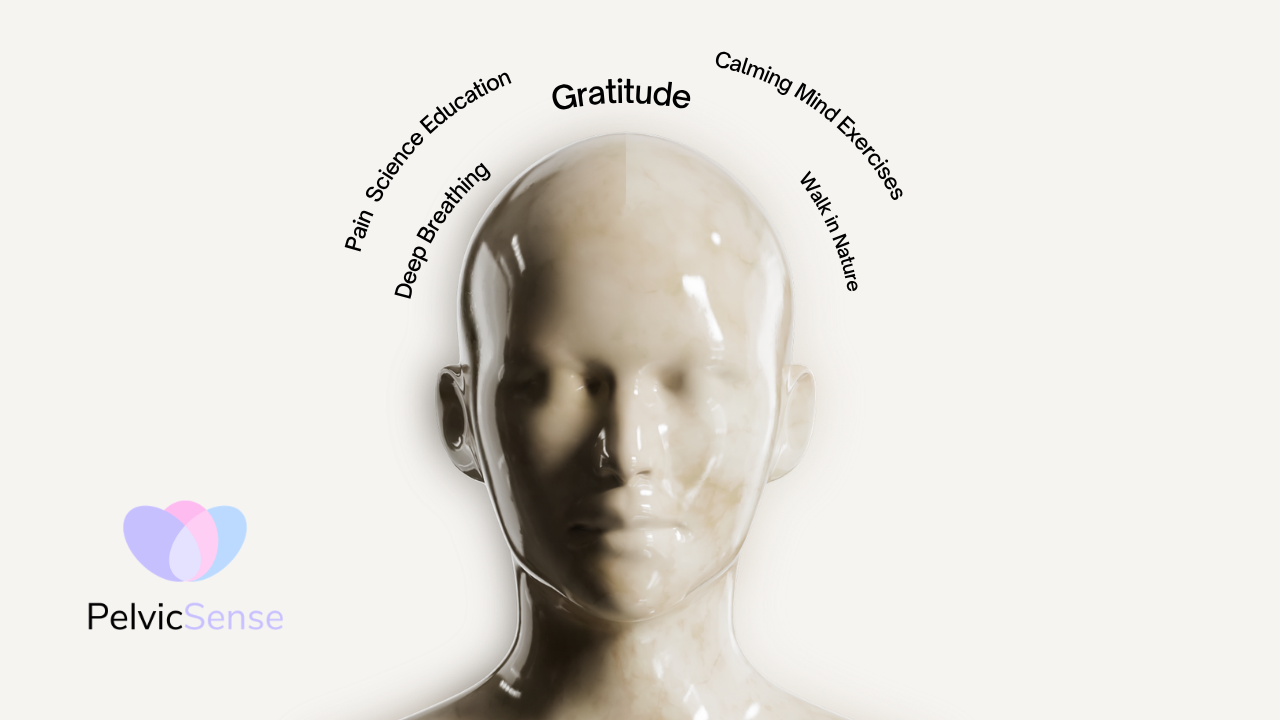
Long waitlists and insurance issues can leave patients without help for extended periods. A home program like PelvicSense can help by teaching you about the brain-pain connection and providing strategies to use at home alongside your medical care.
This three-month digital program teaches you about pain, helps you relax your body, and guides you through gentle breathing and movement. Sending more safety signals to your brain helps it release more feel-good chemicals and fewer signals that make your muscles tense up.
Data from an independent pilot study measuring participants diagnosed with Endometriosis who used PelvicSense for three months demonstrated profound clinical outcomes:
- Direct Pain Reduction: An average drop of 2.5 points on the standard 0 to 10 pain scale as the brain learns to produce fewer pain signals and release feel-good chemicals instead.
- Eradicating Pain Catastrophizing: Baseline pain catastrophizing (intense worry and helplessness) plummeted from an average score of 24 (moderate disability) to a score of 14 (no disability) one year after starting, fundamentally switching the nervous system out of hypersensitivity mode.
- Restored Intimacy: Systematically relaxing guarded pelvic floor muscles directly improved sexual comfort and function.
How Does Endometriosis Affect Your Life?
Endometriosis affects more than just your body. It can impact your emotions, relationships, work, and overall quality of life. Chronic pain, tiredness, and fertility problems can lead to anxiety, depression, and feeling alone. Not knowing when symptoms will appear and waiting a long time for a diagnosis can also hurt your confidence and finances.
Modern care that combines pain education and support can help people manage their symptoms, feel more in control, and get back to daily life. Treating both the physical and emotional sides of endometriosis is important for real relief and a better quality of life.
Conclusion
Endometriosis can affect every part of your life, including your mental health, finances, career, and relationships. Even as medical care improves, you do not have to pause your life. By combining specialized medical care with a Mind-Body Program like PelvicSense, you can help your brain respond differently to threat signals. and take control of your health.
FAQs
Is endometriosis cancer?
No. Endometriosis is not cancer, nor is it considered a pre-cancerous condition. While endometriosis lesions can grow, spread, and attach to organs throughout the pelvic cavity behaving in some ways similarly to how cellular tissue behaves they are entirely benign (non-cancerous).
Is birth control a cure for endometriosis?
No. Birth control is not a cure. It can help reduce and manage individual symptoms such as heavy bleeding or night sweats, but it does not treat or eradicate the disease itself, and its use depends heavily on a person's ability to tolerate its side effects.
Can endometriosis be prevented?
Currently, not yet. Because of a severe lack of research over the past several decades on women’s health issues, we do not know how to prevent endometriosis from developing. However, the tide is finally turning. More rigorous clinical studies are finally being dedicated to this complex disease, and answers may be forthcoming.
Exciting new pilot data shows that women with a diagnosis of endometriosis can significantly decrease their symptoms by utilizing a pain-science-informed mind and body home program. As further large-scale studies elucidate exactly how the brain, nervous system, and immune system interact, we may finally uncover true preventive measures.
Can you still have endometriosis after menopause?
Yes. Contrary to the popular myth that menopause cures the disease, endometriosis can absolutely persist or reappear later in life. While symptoms often improve as ovarian estrogen levels decline, the lesions themselves can produce localized estrogen to remain active.
Furthermore, supplemental hormone replacement therapy (HRT) can reactivate dormant tissue left behind from your reproductive years.
Can you get pregnant if you have endometriosis?
Yes. While endometriosis is a leading cause of fertility struggles, affecting 30% to 50% of individuals with the condition, millions conceive naturally or with reproductive assistance.
How does endometriosis cause infertility?
It can cause structural or anatomical blockages (scar tissue closing off the fallopian tubes), form ovarian cysts (endometriomas) that reduce egg reserves, and create a chronic inflammatory environment in the pelvic fluid that impairs egg and embryo quality.
Author
