
Is Your Pelvic Floor Tight or Weak? Symptoms, Causes and Solutions
Mar 12, 2026
Key Takeaway
- Tightness and weakness can coexist: Pelvic floor muscles can be both too tight (overactive) and too weak (underactive) at the same time.
- Chronic tension leads to weakness: Muscles that stay contracted for long periods, often because of stress, pain, or sitting too much, can become tired, sore, and lose strength.
- Central sensitization matters: Ongoing pelvic pain can change how your nervous system handles signals. This can increase pain and keep pelvic muscles tense.
- Symptoms overlap: Both tight and weak pelvic floor muscles can cause similar symptoms, including urinary issues, pelvic pain, and sexual dysfunction.
- Self-checks and professional help: Simple at-home checks and body awareness can provide clues, but a pelvic health professional can give the most accurate diagnosis and guidance.
- Tailored solutions: Relaxation exercises are essential for tight muscles, while strengthening exercises (like Kegels) are best for true weakness. The right approach depends on your specific needs.
Introduction
The pelvic floor is a group of muscles at the base of your pelvis. They support the bladder, bowel, and reproductive organs in everyone. These muscles help with bladder and bowel control, sexual function, and core strength. Still, many people with pelvic pain or symptoms like urinary leakage wonder, Are my muscles too tight or too weak?
Recent research shows that chronic pelvic pain, urinary problems, and sexual issues can be caused by a tight pelvic floor, a weak one, or both at once. To make things more confusing, tightness and weakness often happen together, and tightness can lead to weakness [Dorey, 2011].
In this blog post, you’ll learn how tension in the pelvic floor can cause weakness, how chronic pain affects your nervous system, and simple ways to check and improve your pelvic floor health.
Types of Pelvic Floor Muscle Dysfunction
Pelvic floor muscle dysfunction generally falls into three categories:
Hypertonic Pelvic Floor (Tightness):
These muscles are overactive, tense, or can’t fully relax. This condition is often referred to as a hypertonic pelvic floor where the muscles stay in a constant state of contraction instead of relaxing normally. This is sometimes called a high-tone pelvic floor. Ongoing tightness can be linked to stress, trauma, pain, or protective body positions, which make the brain keep these muscles tense. When muscles are overactive, blood flow is reduced, causing a buildup of substances that make the area more sensitive and uncomfortable. Tight muscles also don’t work well with your core, so support is less effective, and muscles can get tired.
Hypotonic Pelvic Floor (Weakness):
These muscles have less strength and endurance and may not contract well. Weakness can happen from not using the muscles, aging, nerve problems, or after the muscles have been overactive and tired. Weak pelvic floor muscles might not support your organs well, which can lead to problems like incontinence or prolapse. Sometimes, weakness gets worse because the brain doesn’t give enough signals or motor nerve activation to use these muscles during movement.
Mixed Dysfunction:
Some pelvic, hip, lower back and abdominal muscles are tight while others are weak. Ongoing tension often leads to weakness over time Mixed problems like this are common in people with long-term pelvic pain, central sensitization, or after an injury. The brain may switch between keeping muscles tight and not activating them enough, which makes symptoms unpredictable. To recover, it’s important to work on both relaxing and strengthening the muscles, and to calm the nervous system. [Dorey, 2011].
How Does the Pelvic Floor Become Tight or Weak?

The Tightness-Weakness Link
Many people think tight muscles are strong, but that’s not true. When a muscle stays tight for a long time, blood flow drops and less oxygen gets in. The muscle then relies more on anaerobic metabolism, which causes a buildup of things like lactic acid. Over time, this leads to muscle fatigue, soreness, and less strength and coordination. It’s similar to clenching your fist all day, which eventually makes your grip weaker [Allen et al., 2008].
Chronic Pain and Central Sensitization
People with chronic pelvic pain often develop central sensitization. This means the brain and nervous system become extra sensitive, making pain feel worse and sending distress signals in the pelvic area, even when there is no tissue damage The brain may try to protect you by keeping pelvic muscles tense all the time. [Latremoliere & Woolf, 2009].
Over time, this ongoing tension:
- Reduces blood flow
- Restricts muscle movement
- Inhibits normal muscle contraction and relaxation cycles
- Leads to weakness, fatigue, and further pain
Causes of Tightness and Weakness
- Stress
- Surgery
- Injury
- Childbirth without receiving pelvic rehabilitation post-delivery
- Chronic straining (e.g., constipation)
- Past trauma (emotional or physical)
- Habitual clenching (often unconscious)
- Sitting for long periods or being inactive can lead to pelvic floor problems by making the muscles weaker over time [Nygaard & Shaw, 2016].
How to Tell if Your Pelvic Floor is Tight or Weak
Check for Symptoms of a Tight Pelvic Floor
Tight (hypertonic) pelvic floor muscles may cause:
- Chronic pelvic pain or burning
- Pain during or after sex (dyspareunia)
- Pain with sitting
- Urinary urgency or frequency
- Difficulty starting urination or bowel movements
- Incomplete emptying sensation
- Constipation or straining
- Pelvic pressure or discomfort
- Lower back or hip pain.
Often, pelvic floor tightness is associated with anxiety, stress, or a history of trauma. Both men and women can develop these symptoms.
Check for Symptoms of a Weak Pelvic Floor
Weak (hypotonic) pelvic floor muscles may cause:
- Urinary leakage when sneezing, coughing, or exercising (stress incontinence)
- Difficulty holding back gas or stool
- A heavy or falling out sensation in the pelvis
- Pelvic organ prolapse (bladder, uterus, or rectum bulging into the vagina) [Bo et al., 2017]
- Sexual dysfunction (decreased sensation, difficulty achieving orgasm)
- Lower back pain
It’s important to know that weakness and tightness can happen together. For example, someone might have weak muscles that are also overactive and can’t relax or contract well.
How to Check Your Pelvic Floor at Home
A pelvic health physical therapist gives the most accurate assessment, but you can also try some self-checks at home:
Pelvic Floor Mapping
While sitting or lying down, place a pillow underneath your knees, gently tense and relax different muscle groups, such as your glutes, inner thighs, and abdominals.
Can you contract your pelvic floor without the glutes or inner thighs being activated?
Do you find it difficult to relax your pelvic floor without also relaxing your glutes or abdominals?
If you have trouble moving your pelvic floor on its own, or if it always feels tense, this can be a sign of dysfunction or lack of awareness.
Breathing Test
While sitting, place a hand on your lower belly. Take a deep breath so your belly and pelvic area expand, but your upper chest and shoulders stay mostly still. If your pelvic area feels stiff or you don’t notice movement, you may have pelvic floor tension.
The “Stop-Urine” Test
Try to stop your urine midstream (just for testing, not as an exercise). If this is hard to do, it may mean your pelvic floor is weak. Be careful not to do this test too often, as it can make symptoms worse and is not meant to strengthen your pelvic floor.
Symptom Diary
Keep track of your symptoms (pain, leakage, urgency, constipation, etc.) and when they occur. Patterns may help clarify your pelvic floor state.
If you think you might have a problem, see a pelvic health professional for a full evaluation.
Exercises to Relax Tight Pelvic Floor Muscles
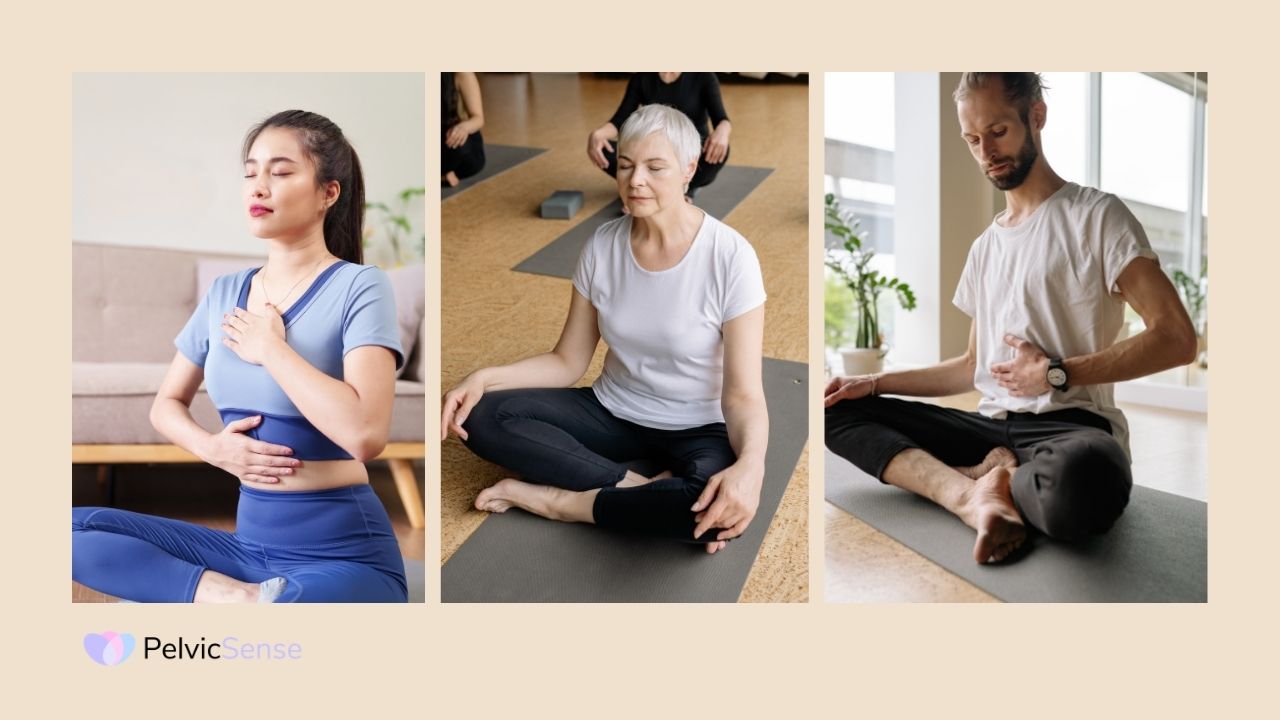
Many people with pelvic pain or tight pelvic floors are told to just do Kegels. However, if your pelvic floor is overactive, Kegels (which strengthen the pelvic floor) may worsen symptoms. Instead, focus first on relaxation.
Diaphragmatic Breathing
This is the main exercise for relaxing the pelvic floor. It helps retrain your nervous system and teaches your pelvic muscles to let go.
How to Do It:
- Find a comfortable position (lying on your back or sitting upright).
- Place one hand on your chest, the other on your belly.
- Inhale slowly through your nose and let your belly and sides expand. Try to feel your pelvic floor drop or release.
- Exhale gently through pursed lips and notice your belly deflate and pelvic floor soften.
5–10 breaths, several times a day.
Kegel Exercises
Kegels are exercises where you contract and relax your pelvic floor. If your pelvic floor is weak and not too tight, Kegels can help. But if tightness is your main issue, start with relaxation and only add Kegels once you can relax fully.
How to Do It:
Imagine you are stopping gas from passing or urine from leaking. Hold the squeeze for 3 to 5 seconds, then relax fully for 6 to 10 seconds. Do 8 to 12 repetitions, working up to 2 or 3 sets each session. Try for 1 or 2 sessions a day, 3 to 5 days a week.
For best results:
- Breathe out as you contract your pelvic floor, avoiding breath holding.
- Rest and fully relax the muscles for 6–10 seconds between each contraction.
- Start with shorter holds of 3 to 5 seconds and slowly work up to longer holds of 8 to 10 seconds as you get stronger.
- Consistency is important. It takes several weeks or even months to build muscle strength, so be patient and stick with your routine.
- If you feel pain, pelvic pressure, or discomfort during Kegels, stop and talk to a pelvic health provider.
PelvicSense Home Program
If you want a structured, science-based way to heal your pelvic floor, the PelvicSense Home Program is a great option. This program includes:
- Pain science education
- Guided relaxation and breathing
- Pelvic floor awareness and mindfulness
- Gentle movement and exercise
- Strategies for calming the nervous system and reducing central sensitization
PelvicSense was created by pelvic health experts and is available as an easy-to-follow home program designed to help you better understand and care for your pelvic floor. The program combines education, guided exercises, and practical techniques that support long-term pelvic health and recovery.
FAQs
How can men tell if their pelvic floor is tight or weak?
Men with tight pelvic floors may experience chronic testicular, penile, or perineal pain, urinary urgency, difficulty starting urination, or pain with ejaculation. Weakness may show up as urinary leakage, difficulty holding gas, or erectile dysfunction. A pelvic floor physical therapist can provide a thorough assessment.
What does an overly tight pelvic floor feel like?
It can feel like deep pelvic or genital aching, a golf ball in the pelvis burning, or stabbing pain. You might notice discomfort with sitting, difficulty relaxing, or an inability to fully empty the bladder or bowel.
How can I relax my pelvic floor muscles while sitting?
Practice diaphragmatic breathing. While sitting, let your shoulders drop, take slow belly breaths, and imagine your pelvic floor melting downward. Use aids like a soft cushion or yoga blocks for support.
How to Strengthen the Pelvic Floor Muscles?
If weakness is your main issue, Kegel exercises (see above) are most effective. Other options include bridges, squats, and core exercises co-contraction your pelvic floor during the exhaustion and releasing during the inhalation. Always ensure you can relax your pelvic floor before working on strengthening.
How to know if you have a Weak Pelvic Floor?
Look for signs like leaking urine with cough/laugh/exercise, difficulty holding in gas, or a heavy sensation in the pelvis. If unsure, see a pelvic floor therapist for a personalized assessment.
Conclusion
The pelvic floor is complex, a balance of strength and relaxation is needed for optimal function. Chronic pain, tension, or weakness can occur separately or together, and both can be addressed with education, self-awareness, and the right exercises. If you suspect pelvic floor dysfunction, don’t guess, get assessed. With the right tools and support, healing is possible.
References
- Dorey G. "Pelvic Floor Muscle Function and Dysfunction: Assessment and Treatment." *Obstetrics, Gynaecology & Reproductive Medicine*, 2011; 21(7): 192-200. [https://doi.org/10.1016/j.ogrm.2011.04.003](https://doi.org/10.1016/j.ogrm.2011.04.003)
- Latremoliere A, Woolf CJ. "Central Sensitization: A Generator of Pain Hypersensitivity by Central Neural Plasticity." *Neuron*, 2009; 64(4): 294-311. [https://doi.org/10.1016/j.neuron.2009.09.033](https://doi.org/10.1016/j.neuron.2009.09.033)
- Dumoulin C, Cacciari LP, Hay-Smith EJC. "Pelvic floor muscle training versus no treatment, or inactive control treatments, for urinary incontinence in women." *Cochrane Database of Systematic Reviews*, 2018. [https://doi.org/10.1002/14651858.CD009508.pub4](https://doi.org/10.1002/14651858.CD009508.pub4)
- Bø K, Hilde G. "Does it work in the long term?—A systematic review on pelvic floor muscle training for female stress urinary incontinence." *Best Practice & Research Clinical Obstetrics & Gynaecology*, 2017; 45: 117-128. [https://doi.org/10.1016/j.bpobgyn.2016.08.005](https://doi.org/10.1016/j.bpobgyn.2016.08.005)
- Allen DG, Lamb GD, Westerblad H. "Skeletal muscle fatigue: cellular mechanisms." *Physiological Reviews*. 2008;88(1):287-332. [https://doi.org/10.1152/physrev.00015.2007](https://doi.org/10.1152/physrev.00015.2007)
- Nygaard IE, Shaw JM. "Physical activity and the pelvic floor." *American Journal of Obstetrics and Gynecology*. 2016;214(2):164-171. [https://doi.org/10.1016/j.ajog.2015.08.067](https://doi.org/10.1016/j.ajog.2015.08.067)
Author
